

Webb Traces the Most Distant Fast Radio Burst Across 10 Billion Light-Years
October 9, 2026 | By Unified Field Press
⠀
A millisecond radio flash from more than 10 billion light-years away leads a week in which scientists learned to measure the universe through signals that are easy to miss: neutrinos in Antarctic ice, a nuclear transition in thorium, tiny impacts on the Moon’s dark side, and unusual elements falling onto a white dwarf.
⠀
Together, these results show how modern science advances when an instrument turns a faint trace into a physical measurement. They also show why evidence labels matter. Some conclusions are peer-reviewed measurements; others remain candidate explanations that need another observation to break the tie.
⠀
The Week’s Big Picture
⠀
This week’s strongest developments share one theme: invisible information became observable. Webb and MeerKAT used a fast radio burst to probe most of cosmic history. IceCube’s transformation of Antarctic ice into a neutrino detector earned the 2026 Physics Nobel. Two independent teams crossed the threshold from nuclear spectroscopy to operating thorium-229 clocks.
⠀
Closer to home, Artemis II astronauts witnessed five lunar impact flashes, while archived Hubble data revealed a chemical pattern consistent with a planet that may have formed after its star became a white dwarf. None of these stories needs exaggeration. The measurements are striking on their own.
⠀
Webb Traces the Most Distant Known Fast Radio Burst
⠀
What happened
⠀
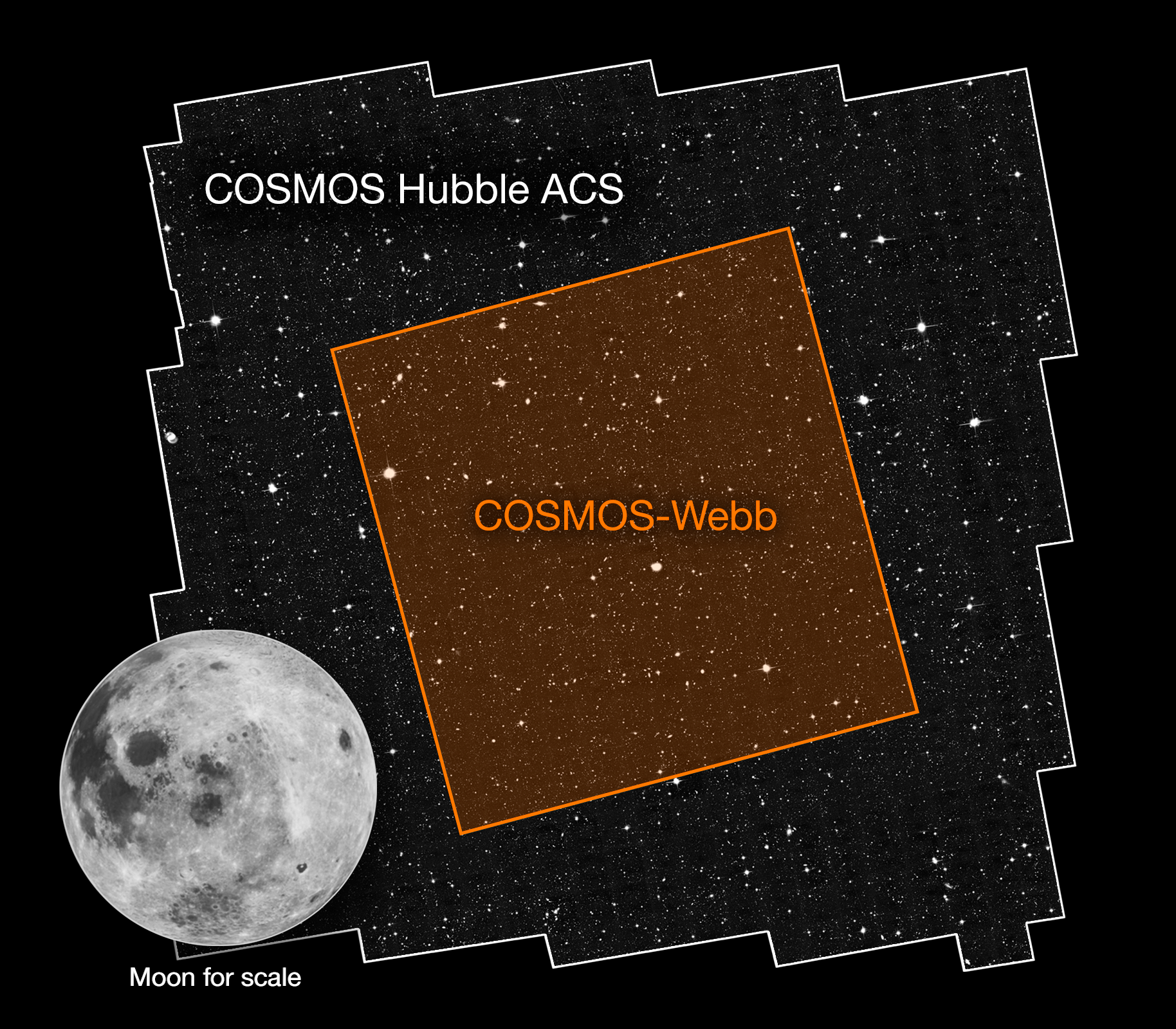
MeerKAT detected FRB 20240304B on March 4, 2024 and localized the millisecond radio flash precisely enough for follow-up. Webb’s NIRCam found a faint galaxy at the position, and NIRSpec measured a redshift of 2.148. The burst occurred when the universe was only about 3 billion years old.
⠀
The host is a small, metal-poor dwarf galaxy undergoing intense star formation. It is roughly 1,000 times less massive than researchers initially expected for such a distant event, making this system different from many previously localized fast-radio-burst hosts.
⠀

⠀
Why it matters
⠀
This is the most distant securely localized fast radio burst reported to date. Its signal crossed more than 10 billion light-years, carrying the imprint of ionized matter and magnetic structure along the line of sight. Researchers identified contributions associated with the nearby Virgo Cluster and a previously unknown foreground galaxy cluster.
⠀
The host’s very young stellar population makes a long-delay merger of two neutron stars less plausible for this event and is more compatible with a young magnetar. That narrows the field, but it does not identify the burst mechanism. Fast radio bursts remain an unresolved source class.
⠀
What the evidence supports
⠀
Evidence status: peer reviewed and published in Science on October 8, with MeerKAT radio localization and Webb imaging and spectroscopy. Confidence is very high in the host association and redshift, and high in the record-distance claim. The magnetar interpretation remains a favored scenario rather than a detection of the source itself.
⠀
⠀
The 2026 Physics Nobel Recognizes IceCube’s New Window on the Universe
⠀
What happened
⠀
The Royal Swedish Academy of Sciences awarded the 2026 Nobel Prize in Physics to Francis Halzen for decisive contributions to the IceCube Neutrino Observatory and the discovery of high-energy neutrinos of astrophysical origin.
⠀
IceCube uses thousands of optical sensors embedded deep in Antarctic ice. When a high-energy neutrino interacts near the detector, the resulting charged particles produce faint flashes of Cherenkov light. Reconstructing that light lets researchers estimate the particle’s energy and incoming direction.
⠀
Why it matters
⠀
Neutrinos pass through matter that blocks or scatters ordinary light, so they can carry information from dense and violent cosmic environments. IceCube helped establish high-energy neutrino astronomy as a practical way to investigate cosmic accelerators alongside gamma rays, radio waves, X-rays, and gravitational waves.
⠀
What the evidence supports
⠀
Evidence status: official Nobel announcement recognizing an established, peer-reviewed body of work. The prize is not a new neutrino detection and does not validate a particular cosmological model. It recognizes the detector concept, scientific leadership, and discovery of astrophysical high-energy neutrinos.
⠀
⠀
The First Operating Thorium-229 Nuclear Clocks Begin Ticking
⠀
What happened
⠀
Independent teams in Vienna and Beijing stabilized continuous-wave vacuum-ultraviolet lasers to the unusually low-energy transition of thorium-229 nuclei embedded in calcium-fluoride crystals. Both peer-reviewed results appeared in Nature on October 7.
⠀
The Vienna system used changes in crystal absorption as an error signal to correct its laser continuously. The Beijing team independently synchronized a laser to the same nuclear reference. These are operating, self-referenced nuclear clocks rather than measurements made only by comparison with an external frequency standard.
⠀
Why it matters
⠀
Today’s best clocks use electronic transitions in atoms. A nuclear transition is more tightly shielded from many environmental disturbances and could eventually support exceptionally stable timekeeping. Nuclear clocks could also become sensitive tests for small changes in fundamental constants and for certain forms of new physics.
⠀
What the evidence supports
⠀
Evidence status: two independent, peer-reviewed Nature papers. Confidence is very high that both groups operated thorium-229 nuclear clocks. The prototypes do not yet outperform the best optical atomic clocks, and claims about detecting dark matter or changing constants remain future experimental possibilities, not current results.
⠀
⠀
Artemis II Astronauts Witness Five Lunar Impact Flashes
⠀
What happened
⠀
NASA’s preliminary lunar-science report says Artemis II astronauts saw five extremely faint pinpricks of light while Orion was about 46,000 miles from the Moon during the mission’s far-side eclipse in April 2026. Multiple crew members independently marked some of the same flashes.
⠀
The science team ruled out spacecraft reflections and cosmic-ray artifacts before confirming the events as small objects striking the lunar surface. Based on brightness, NASA estimates that the impactors were no more than a couple of inches across, although the detailed size distribution remains preliminary.
⠀
Why it matters
⠀
The Moon has no atmosphere to burn up incoming debris. Direct observations of small impacts can improve estimates of how often they occur and help quantify long-term risks to lunar habitats, surface equipment, and astronauts. The nearly hour-long eclipse created unusually dark conditions for seeing the flashes.
⠀
What the evidence supports
⠀
Evidence status: NASA agency report and preliminary mission-science analysis. Confidence is high that the five flashes were real lunar impacts after the mission team’s artifact checks. Broader conclusions about impact frequency and projectile sizes should wait for the complete dataset and comparison with orbital observations.
⠀
⠀
Hubble Chemistry Points to a Possible Second-Generation Planet
⠀
What happened
⠀
A peer-reviewed Nature Astronomy study revisited archival Hubble spectra of the young white dwarf HS 0209+0832. Updated atomic data matched many previously unidentified absorption features to niobium, an element associated with material produced during a star’s late evolutionary stages. Retired FUSE observations independently showed the strong niobium signature.
⠀
Four months of TESS data also revealed periodic brightness variations consistent with an object orbiting roughly 6 million kilometers from the white dwarf. The proposed explanation is a Jupiter-size gas giant that formed from material expelled as the original star died and is now losing atmosphere back onto the white dwarf.
⠀
Why it matters
⠀
Planets normally form with their stars. If confirmed, this object would instead represent a second generation: a world assembled from enriched debris after the host star shed its outer layers. That would extend the life story of planetary systems beyond the death of a Sun-like star.
⠀
What the evidence supports
⠀
Evidence status: peer reviewed in Nature Astronomy. The niobium absorption and periodic variability are measurements. The second-generation gas giant is a model that connects those observations; the planet has not been directly imaged. Follow-up work must rule out competing sources of the variability and chemical pollution.
⠀
⠀
Science News UFP Is Watching Closely
⠀
Over the coming week, Unified Field Press will be watching for repeat or multiwavelength observations of FRB 20240304B, independent stability tests of the new thorium-229 clocks, and deeper analysis of Artemis II’s impact-flash dataset. We will also follow attempts to confirm the proposed second-generation planet and new SPHEREx brown-dwarf atmosphere results released this week.
⠀
Return each Friday for the Weekly Science Roundup. We track the most consequential space science, astronomy news, astrophysics, NASA news, cosmology, and latest science discoveries, then separate what was measured from what is still being interpreted.
⠀
Latest From Unified Field Press
⠀
Our latest substantial long-form video explores the full stellar ladder, from trillion-year red dwarfs to white dwarfs, neutron stars, pulsars, and magnetars. Read the companion article, The Most Extreme Stars in the Universe: From Red Dwarfs to Magnetars, then watch the video below. New releases continue throughout the week.
⠀
⠀
⠀
About the Weekly Science Roundup
⠀
Unified Field Press selects the week’s most important developments, checks primary or authoritative sources, separates observations from interpretation, and labels preliminary evidence appropriately. The goal is clear science coverage without turning uncertainty into certainty.
⠀
Unified Field Press publishes new science coverage throughout the week, and the Weekly Science Roundup brings the biggest developments together every Friday.

Comments